Foundation for Orthodontic Aligners Pakistan (FOAP)
New Press Release: Clear aligner therapy represents one of the fastest-growing segments in dental practice revenue >

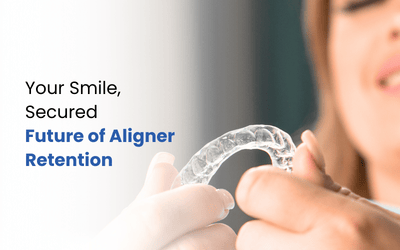
Your Smile, Secured
Future of Aligner Retention
Get started
Retention After Aligner Therapy: Why Retainers Matter
The journey to a perfect smile doesn’t end when you remove your last set of trays. In fact, for many, the most critical phase of orthodontic care begins the moment the active movement stops. Retention after aligner Therapy is the biological insurance policy for your investment, ensuring that the bone and periodontal ligaments supporting your teeth have the time they need to solidify in their new positions. Without a dedicated retention plan, the natural phenomenon of relapse can quickly undo months of progress, making the transition from active treatment to long-term maintenance a pivotal chapter in any orthodontic success story.
Why Your Teeth Want to Move
To understand why retention after orthodontics is non-negotiable, we must look at the biology of tooth movement. When clear aligners apply pressure to a tooth, the bone on one side resorbs while new bone forms on the other. However, this new bone is initially “soft” or less mineralized. Furthermore, the elastic fibers in the gums (gingival fibers) act like tiny rubber bands; they have been stretched during treatment and naturally want to pull the teeth back toward their original, crowded, or spaced-out positions.
This is why a retention plan after invisalign treatment or any clear aligner system is vital. It takes approximately 12 to 18 months for the bone and fibers to fully reorganize and stabilize. If a patient ignores their retainer during this window, the risk of “orthodontic relapse” is nearly 100%.
How It Works
The shift from aligners to retainers is a structured process designed to bridge the gap between movement and permanence.
The Final Scan: Once the clinical goals are met, your practitioner will take a final digital impression using high-precision scanners.
Manufacturing the Guard: These scans are used to create a custom-fit retainer that exerts zero pressure for movement but maximum pressure for holding.
The “Full-Time” Phase: Most specialists recommend wearing the retainer 22 hours a day for the first 3-6 months.
The “Night-Only” Phase: Gradually, patients transition to wearing the retainer only while sleeping.
Lifetime Maintenance: In the Future of Orthodontics, the consensus is moving toward “nighttime for a lifetime” to combat age-related tooth crowding.
Features of Modern Retainers
Modern retention technology has evolved alongside clear aligner training methodologies.
Thermostabilized Material: Modern retainers (like Vivera) are made from medical-grade polymers that are more durable than standard essix retainers.
Digital Archiving: Most clinics now keep a digital file of your “final smile,” meaning if you lose a retainer, a new one can be printed without a new scan.
Fixed vs. Removable Options: Patients can choose between bonded lingual wires (fixed) or clear removable trays.
Step-by-Step Process for a Successful Retention Plan
Implementing an effective retention after orthodontics strategy requires a disciplined clinical workflow to ensure no detail is overlooked:
- Post-Treatment Clinical Assessment: Once the final aligner tray is completed, the clinician performs a comprehensive “de-bonding” exam. They verify that all clinical goals—including proper overjet, overbite, molar relationship, and aesthetic alignment—have been met. Any “refinements” must be completed before moving to the retention stage.
- Removal of Attachments: For clear aligner patients, the composite “buttons” or attachments used to facilitate tooth movement are carefully polished off the enamel surface, ensuring a smooth finish for the retainer fit.
- High-Precision Impression or Intraoral Scan: Accuracy is paramount. Digital scans are heavily emphasized in modern clear aligner training as they provide the highest dimensional stability. Unlike traditional PVS impressions, digital scans do not suffer from distortion during shipping or pouring, ensuring “Vivera” style or Essix retainers fit with micrometer precision.
- Retention Selection & Prescription: The dentist and patient collaborate to decide between fixed (bonded) or removable retainers. This choice is influenced by the patient’s initial malocclusion (e.g., were there large gaps?), their lifestyle, and their predicted level of compliance.
- The “Full-Time” Consolidation Phase: For the first 3–6 months, patients are typically advised to wear their retainers 22 hours a day. This mirrors the active treatment phase and is crucial for early bone stabilization.
- The “Night-Only” Transition: After the initial consolidation phase, the clinician evaluates the stability. If no movement is detected, the patient transitions to wearing the retainer only while sleeping (8 hours).
Long-Term Monitoring & Maintenance: Retention is a lifelong commitment. Annual check-ups at the dental office ensure the retainer remains intact, fits correctly, and that the patient is maintaining optimal oral hygiene around the appliance.
Benefits of a Structured Retention Plan
Protection of Financial Investment: Orthodontic treatment is a significant expense; retainers ensure you don’t have to pay for it twice.
Maintained Oral Health: Properly aligned teeth are easier to clean, reducing the risk of decay and gum disease long-term.
Confidence Preservation: A stable smile means never worrying about your teeth shifting before a big event or photo.
Functional Harmony: Retention keeps your bite (occlusion) aligned, preventing TMJ issues and uneven wear on tooth enamel.
Smart Retention
As we look toward the Future of Orthodontics, we see the integration of AI and biometric sensors. Imagine a “Smart Retainer” that syncs with your phone to track wear time or alerts your dentist if it detects shifting. Furthermore, advancements in clear aligner training for general practitioners are ensuring that more doctors understand the nuances of occlusion and long-term stability than ever before.
FAQ's
How long need to wear a retainer?
Biologically, your teeth will always have a tendency to move. For the best results, you should wear a retainer indefinitely at night.
Can last aligner tray used as a retainer?
While it works for a few days, aligner trays are made of thinner material intended for movement. Proper retainers are thicker and designed for long-term durability.
What happens if I forget my retainer for a week?
You may feel tightness when you put it back in. If it doesn’t fit at all, your teeth have shifted and you must contact your provider immediately.
How to clean clear retainer?
Use lukewarm water and a mild, non-abrasive soap. Avoid toothpaste, as it contains abrasives that can scratch the plastic, making it look cloudy and creating places for bacteria to grow. Using specialized cleaning tablets once a week is also recommended.